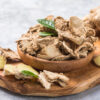

The modern food industry runs on one non-negotiable requirement: consistency at scale. Whether it’s a seasoning brand supplying millions of sachets a month or a ready-meal manufacturer exporting across regions, the biggest challenge isn’t taste—it’s delivering the same taste, texture, and performance every single time.
This is where dehydrated vegetables have quietly become indispensable.
Unlike fresh produce, dehydrated vegetables are engineered for industrial use. They are not just ingredients; they are process enablers that allow food manufacturers to simplify operations, control variability, and scale without disruption.
The Problem with Fresh Vegetables at Scale
Fresh vegetables work well in kitchens—but food factories are not kitchens.
At industrial volumes, fresh onions, garlic, or ginger introduce several challenges:
- Variation in moisture and pungency from batch to batch
- Short shelf life and cold storage dependency
- Labour-intensive washing, peeling, chopping, and trimming
- High wastage and yield loss
- Seasonal price and availability fluctuations
Many manufacturers discover this only after scaling up, when small inconsistencies start compounding into major quality and cost issues.
A common question procurement and production teams ask is: “How do we maintain uniform taste without constantly adjusting formulations?”
Why Dehydrated Vegetables Solve This Problem
Dehydrated vegetables are processed under controlled conditions to remove moisture while preserving flavour, aroma, and functionality. This makes them far more predictable than fresh inputs.
From a manufacturing standpoint, dehydrated vegetables offer:
- Stable moisture levels that don’t fluctuate daily
- Standardised particle sizes for predictable performance
- Long shelf life, often up to 12 months
- Ready-to-use formats that eliminate preprocessing
This predictability is what allows food companies to lock recipes, automate production lines, and reduce dependency on skilled manual labour.
Formats Matter More Than Most Buyers Realise
One mistake buyer often make is treating all dehydrated vegetables as interchangeable. In reality, format selection directly affects product performance.
For example:
- Flakes and chopped forms are chosen when visible inclusions are required
- Granules work best for dry blends and coatings where uniform dispersion is critical
- Powders deliver fast flavour release and consistency in sauces and instant foods
- Minced formats balance texture and flavour in gravies and marinades
Choosing the wrong format can lead to uneven seasoning, flavour loss, or rehydration issues—even if the raw material quality is good.
This is why experienced buyers don’t just ask what product is available, but how it behaves during processing.